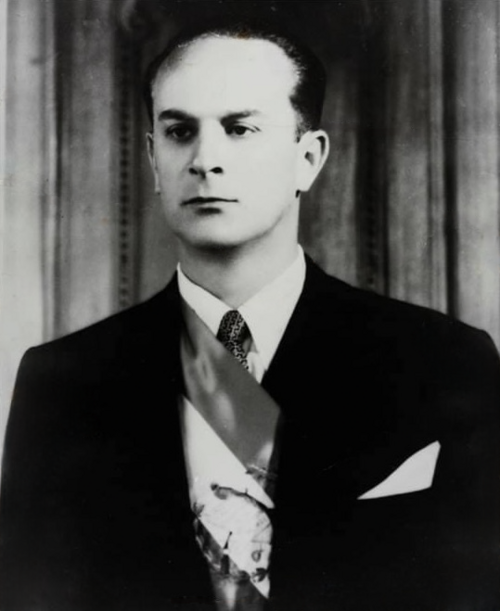
The primary source is a U.S government report that was published by the National Security Council in 1953. The report discusses whether the United States should take legal action against United Fruit Company for their violations of anti-trust laws. The document helps us to understand how the U.S evaluated whether it would be for them to take action. This document was created during the early cold war. It was issued during a time where the United States was trying to limit the spread of communism. The U.S were worried that if the United Fruit Company were prosecuted, this would aid Jacobo Arbenz and help spread communism. The document was created by the National Security Council Planning Board within the U.S. government. It was created to understand the benefits and losses in the prosecution of the United Fruit Company.
The document reflects the author putting the U.S. national security and political influence over the enforcement of laws. They acknowledge that the United Fruit Company are violating the law, they argue against taking action because it could strengthen Jacobo Árbenz and reduce U.S. control in Latin America. The larger historical significance is that the U.S was willing to overlook illegal actions by the United Fruit Company in order to maintain influence in Latin America. They also did this to prevent the rise of governments like that of Jacobo Árbenz. This helps to explain how Banana Republics were allowed to do what they did despite all the violations they incurred. This relates to my project because it helps shine light on the benefit of Banana Republics to the United States. It also shows us that the United States were willing to overlook the law if it was beneficial to them.
“The Department of Justice states that the violations of law by the Company are pervasive, including price-fixing, allocation of domestic markets, dumping in order to decrease prices to injure competitors, and reservation of unused shipping space by the Company in order that competitors may not transport their bananas…The institution of anti-trust action against the United Fruit Company at this time, regardless of the merits of the action under U.S. law, would adversely affect our national security interests…It would tend substantially to consolidate the position of the Communist-dominated Arbenz government of Guatemala, a major center of anti-U.S. influence in Latin America…For the U.S. Government to brand the Company as an offender against U.S. law would, under these circumstances, appear to justify Arbenz’ position completely, and would thus greatly strengthen his hand.”
Source:
National Security Council Planning Board. “Report Prepared by the National Security Council Planning Board.” June 1, 1953. Document 45 in Foreign Relations of the United States, 1952–1954, The American Republics. Vol. IV. Edited by U.S. Department of State. Washington, DC: Government Printing Office, 1983. https://history.state.gov/historicaldocuments/frus1952-54v04/d45.