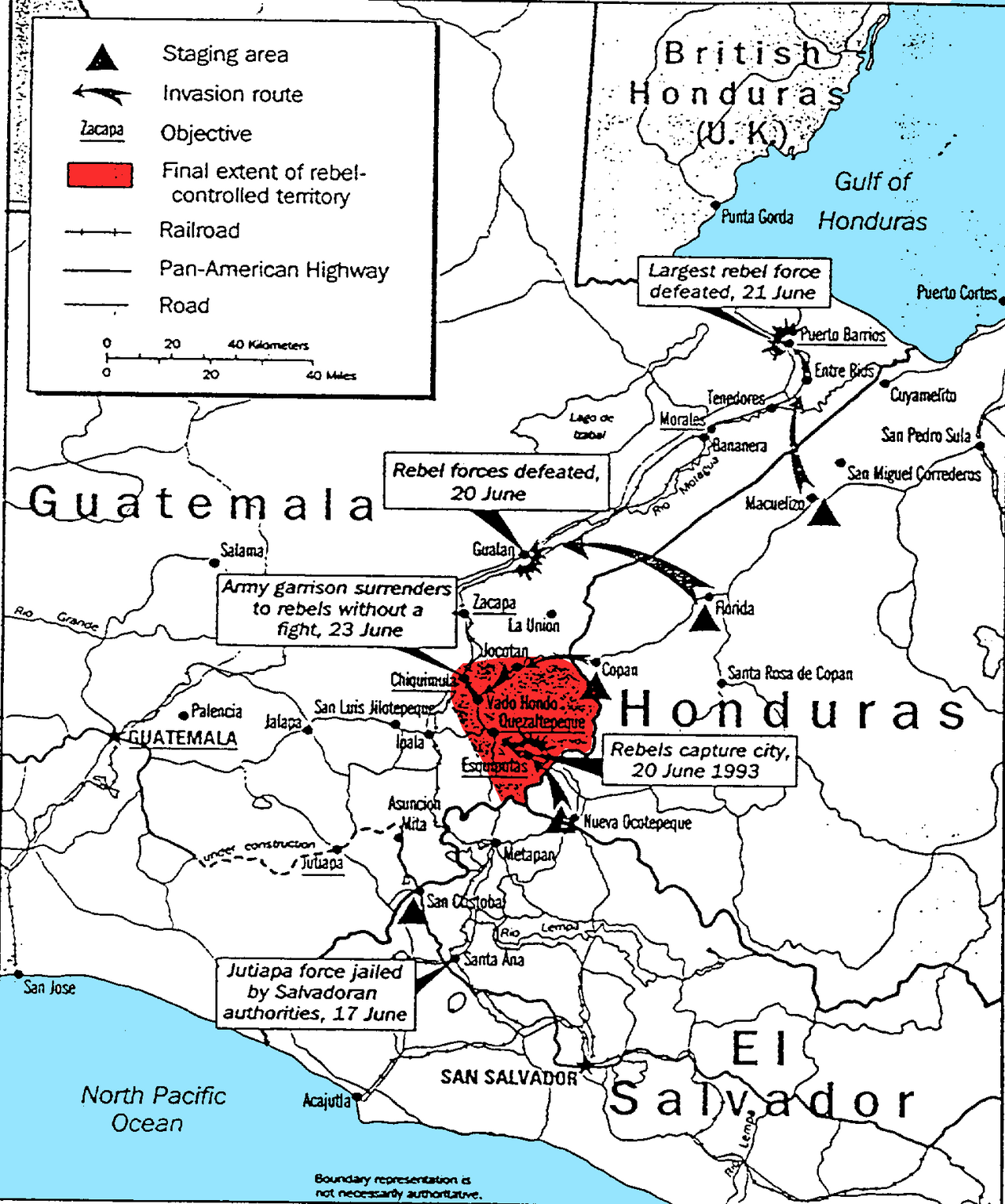
This source is the CIA’s internal written history of Operation PBSUCCESS. It was written by the historian Nicholas Cullather in 1994 while he was working for the CIA’s Center for the Study of Intelligence. It contains the CIA’s own account of how it planned and executed the overthrow of Árbenz’s government. In 1952, the United Fruit Company had launched propaganda campaigns that aimed to frame the Guatemalan president Árbenz as a communist. The Eisenhower administration had authorized the CIA to begin planning a covert operation to overthrow Árbenz. Operation PBSUCCESS was a cover operation that included an intense propaganda campaign using methods such as fake radio broadcasts and bribery and included a U.S backed invasion. The purpose of this document was to detail the events that took place in Operation PBSUCCESS and how the operation worked.
This document reflects the point of view of a historian that was given access to classified records and was tasked to write an institutional assessment of the operation. He wrote honestly and not in a way that would defend the actions of the U.S. He also details that the operation was very inefficient. This primary source is extremely significant because it was a confirmation using internal CIA sources that the UFC utilized propaganda campaigns to accuse Árbenz of being a communist. Also, the history of this operation can be used by the U.S to reflect and execute a more efficient operation in the future. This source is useful for my project because it provides direct evidence from inside the CIA of the exact information control strategies that were used to overthrow Árbenz. It is perfect for my research question.
“PBSUCCESS would combine psychological, economic, diplomatic, and paramilitary actions. Operations in Europe, and Iran had demonstrated the potency of propaganda — ‘psychological warfare’ — aimed at discrediting an enemy and building support for allies. Like many Americans, US officials placed tremendous faith in the new science of advertising. Touted as the answer to underconsumption, economic recession, and social ills, advertising, many thought, could be used to cure Communism as well…Agency propaganda operations succeeded in making Guatemala into the type of repressive regime the United States liked to portray it as. By late April, freedoms of speech and assembly had all but been revoked by official decrees and unofficial goon squads, which intimidated independent newspapers and radio stations into silence…an Agency legend developed, promoted by Bissell and other officials close to the operation, that Arbenz ‘lost his nerve’ as a result of the psychological pressure of air attacks and radio propaganda.”
Source
Cullather, Nicholas. Operation PBSUCCESS: The United States and Guatemala, 1952–1954. Washington, D.C.: Central Intelligence Agency, Center for the Study of Intelligence, 1994. Declassified 1997. Internet Archive. https://archive.org/stream/CIA-Guatemala-Coup-Report/DOC_0000134974_djvu.txt.